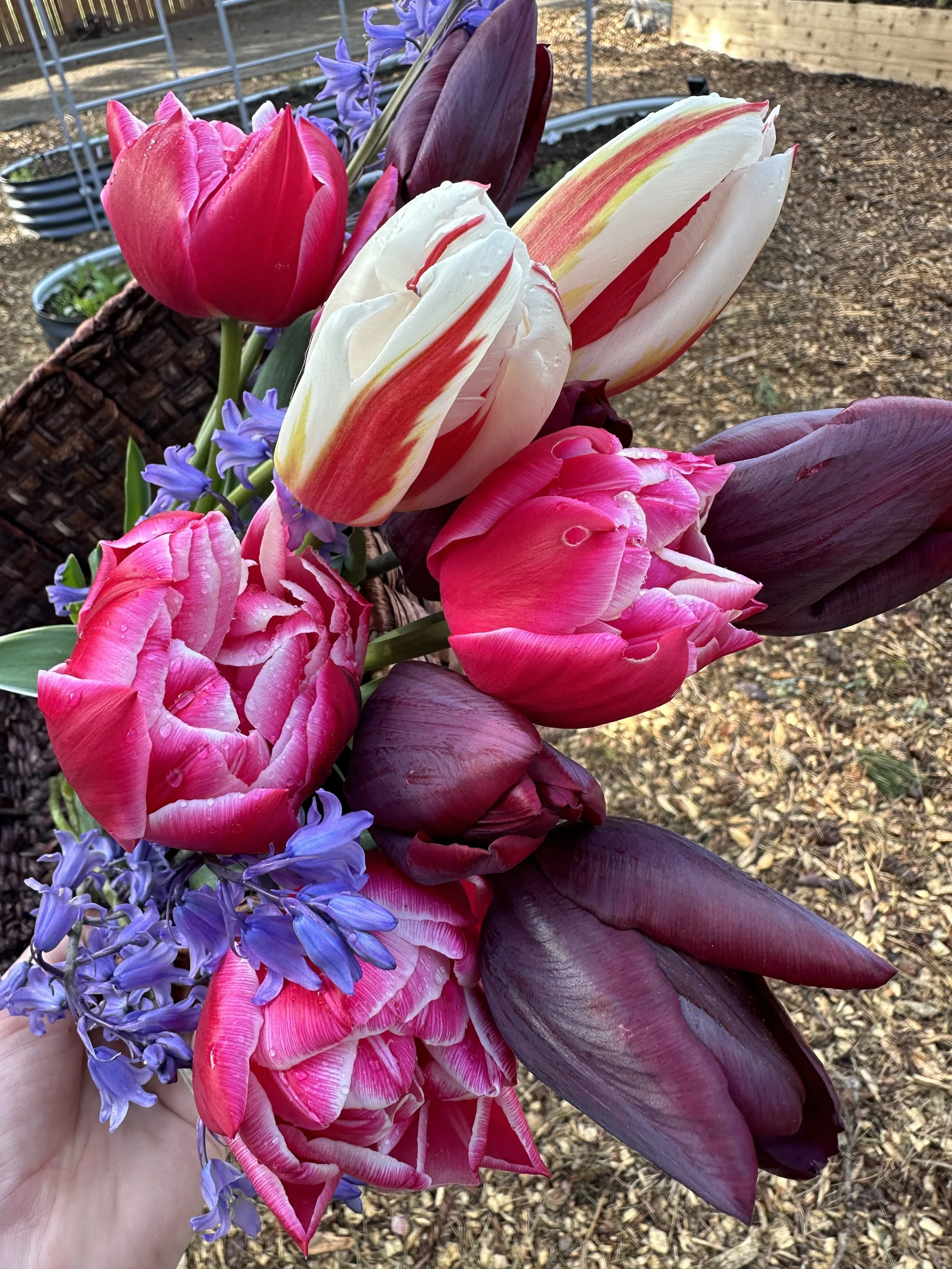
Spring Math: Forcing Bulbs & Corms
“You know nothing Jon Snow” has never felt closer to home.
If you had told me four years ago that I would be researching how to force tulips and ranunculus and hyacinth and anemone (not the ocean version) I would have been… maybe not surprised but I’d definitely have some questions.
Somehow in the past year I have started to fancy myself a florist and have been lucky to floralize (is that a word?) two weddings and have a few more on the way. One of those weddings is in March, arguably the most dreary month of the year (hello seasonal depression) and also the final curve before Spring (let’s celebrate). I’ve been thinking and brainstorming flowers we could grow here at Lord of Toil, things that I know ‘for sure’ will be in bloom; daffodils, hyacinth, hellebore…? I don’t think there is ever a ‘for sure’ when it comes to growing plants and Mother Nature always makes the final call.
In light of that, I have gotten into my head to try forcing some bulbs and corms in hopes that I will have an abundance of blooms by the middle of March. Aka I am growing them inside my house and/or greenhouse. We will see how it goes.
The problem is that I have never done it before, tulips have different cooling times depending on the variety, and the internet has too much information but also not enough. I have also never ordered wholesale/bulk corms and bulbs before, so that’s another logistical nightmare that I hope gets better with confidence.
Trial and error, with some best guessing, has always been my go-to, so I’ve taken what information seems relevant to my situation and have started making some timelines. My timelines are based on taking the date of the wedding and subtracting weeks based on growing times and reviews. Sorry to anyone that is reading this and fuming because everything I’m about to write is incorrect or not how you’d do it. Anyway!
For example, ranunculus takes approximately 12-13 weeks (90 days) to bloom after planting and don’t need a chilling period.
First, you will want to soak your ranunculus corms in water for a few hours to plump them up before planting. Making sure to change the water every thirty minutes or hour or so (depends who you ask on the amount of hours to soak and the amount of times to change the water). But it seems important to note that most people agree you shouldn’t skip this step regardless of how you’re growing them. From there plant the cute octopus looking corms legs down into some moist/damp potting mix. Plant the corms 1-2 inches deep. The containers on this vary as well, ranging from trays, to small pots, to crates. I am going to try 4 inch pots I think or a crate… or both! I have commandeered a few crates from grocery stores in my area. After this, put them into a cool, dark, scary place until the little sprouts emerge. My notes are fuzzy here, but I wrote 10-12 weeks, which seems maybe… wrong.
You should start to feel like Dr. Frankenstein by this point. After they emerge, bring your creation into a nice, shiny, sparkly, bright spot. I am going to use my recreation area aka my office because I have grow shelves and lights in there and they can’t wait for this moment. I guess after this… your ranunculus should grow a flower, or 20, depending on your variety and how much you’re cutting it. I am going to succession plant these from the beginning of November throughout December, roughly, in hopes that I can get these flowering by March 13. Same with the anemones. I want them to bloom as early as possible to be able to cut the stems and get longer blooms. But I’ll take what I can get.
Tulips need a chilling period of 14 to 19 weeks and then another 3 to 4 weeks to bloom. I threw about 100 bulbs into my fridge a couple days ago and will need to keep throwing more in there. You will want a dedicated spot in the crisp drawer of your fridge away from any evil fruits, such as apples, that will leak their toxic gas and kill your tulips bulbs. You can skip this step by buying prechilled tulip bulbs, which I did do in fear. Hyacinth also need a chill period, so write that down. The rules for tulip forcing is all over the place, but in a gist, chill them for 14 to 19 weeks, take the bulbs out and then pot them up with some cute, fresh soil. For this I am going to use the crates that I mentioned earlier.
Put the potted up bulbs, or crated up bulbs, into a dark, cool, scary place, like a basement or an overflowing garage for another week or so. They like to grow in darkness, much like I did as a teenager #relateable. Afterwards, move the tulips into a bright spot. They should have sprouted by now and could be yellow according to my sources, but allegedly that is fine. It’s yellow because we are treating the bulbs badly and forcing them to bloom unnaturally. So take your ugly yellow sprouted tulips and put them in a special bright spot to earn their forgiveness. From here they should bloom in 3 to 4 weeks. I am also succession planting these so that I do not disappoint my friend and type A bride. I fear her, so I fear failure. Your tulip varieties will have their chill time needs in their description (probably) or you can google it. So some of these I’ll have to start chilling 20 weeks before.
I am going to experiment and update this as I go. Currently I have 300 tulips that are prechilled, being delivered, at some point, along with 50 prechilled hyacinths. 100 in the fridge and a lot of corms. And also almost 2,000 other tulips, a few hundred corms, and obviously I have already preordered dahlias for spring planting, even though I haven’t even finished dividing the tubers I have.
We are also planting bulbs and corms the ‘regular way’ outside in successions from now until December.
Again, forgive any misinformation, I don’t know what I am doing. Feel free to correct me anytime, day or night, at Lord of Toil on Instagram.
I suggest looking up Micro Flower Farm, Floret Flowers, or other growers in the PNW for regular (good) advice on planting.
Or other growers in your planting zone.
Special thanks to timeanddate.com